
Save Yourself & Stop Hitting Snooze
My Personal SAD Journey + What Helped Me Get My Energy Back (as seen on Instagram!)
There was a time when I felt like a tired shell of a person every winter.
I can remember experiencing Seasonal Affective Disorder (SAD) symptoms as early as high school - so this has been part of my life for well over a decade.
But 2024 felt different.
After a really hard year in 2023, I moved into 2024 carrying my usual winter fatigue - but this time it was layered with burnout and lingering depression. And even when summer rolled around, I wasn’t bouncing back.
I was hitting snooze over and over. Waking up already exhausted. Dragging myself through mornings. Which didn’t make sense. I had my dream job. It was summer. Life, on paper, looked good.
I kept telling myself, “I’m just not a morning person.”But deep down, I knew there was more going on. And with fall approaching - knowing how much harder winter typically hits me - I realized I couldn’t just brush it off this time. I had to dig deeper.
This is the story of how I went from dragging myself out of bed to waking up with a genuine pep in my step - even during peak SAD season.
This post covers three things:
What I asked my doctor to rule out
How I changed the way I spoke to myself
The practical habits that made mornings easier
Let’s get into it.
Part 1: Cover Your Bases with a Medical Check
View part 1 instagram reel here
If you are tired all of the time, don't skip this step.
First things first: rule out underlying causes.
I am not a doctor, and this blog does not create a provider relationship. But if you’re chronically exhausted, please go talk to your primary care provider (PCP).
Tell them you’re tired all the time and want to rule out and underlying condition. A good starting point is ruling out:
Thyroid issues
Anemia
Vitamin D deficiency
The need for medication or supplementation
That’s exactly what my PCP and I did.
1. Ruling Out Hypothyroidism
Your doctor will likely check:
TSH (Thyroid Stimulating Hormone)
T4
T3
With hypothyroidism, TSH is typically elevated while T4 and T3 may be low.
If labs indicate thyroid dysfunction, follow up with your provider. You may be referred to an endocrinologist and/or a dietitian for ongoing support.
2. Ruling Out Anemia
A comprehensive panel may include:
RBC
Hemoglobin (Hb)
Hematocrit (Hct)
MCV, MCH, MCHC
Iron
Ferritin
TIBC
B12
Folate
If anemia is present, your provider may recommend short-term supplementation while you work on long-term dietary adjustments with a dietitian. There are different causes for anemias, but three reasons can be attributed to low iron, vitamin B12, or folate intake. Here is a chart I reference myself when interpretting lab work:
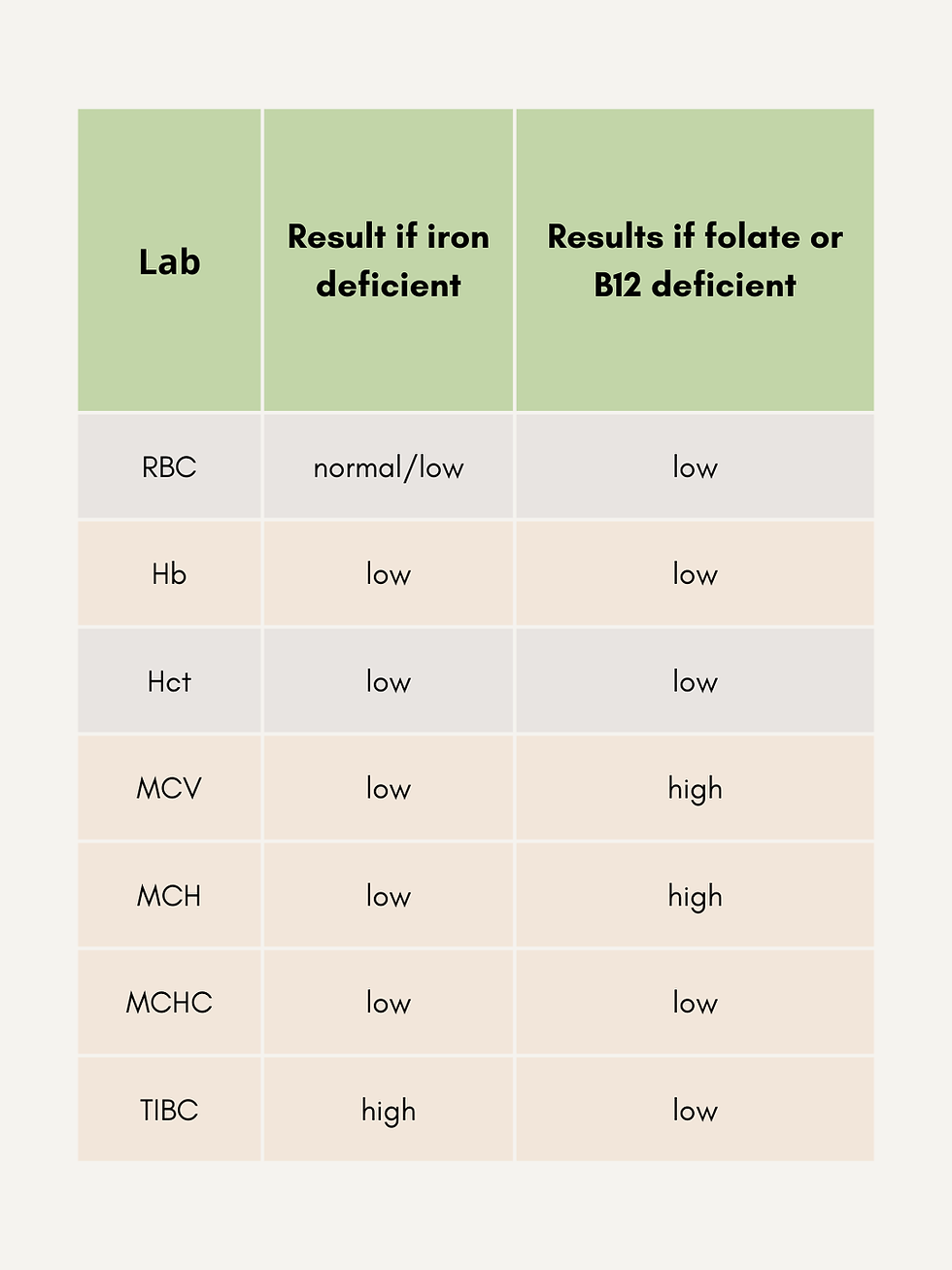
Note: This chart is for educational purposes only, not for diagnosing a disease- Go talk to your doctor. If really iron deficieny anemia is present, then RBC will eventually be low, but its common that they still are normal until it progresses (PMCID: PMC5986027). There are further tests to figure out if folate vs B12 deficiency, of course you could just supplement with both but there is an autoimmune cause for low B12 called pernicious anemia so go back to your doctor for follow up!
3. Ruling Out Vitamin D Deficiency
Your provider may check Vitamin D, 25-Hydroxy.
If levels are low, supplementation may be recommended in the short term, alongside nutrition and lifestyle support for maintenance. Meeting with a dietitian is still a good idea.
For me? All my labs were within normal limits.
That meant there likely wasn’t an underlying medical explanation for my exhaustion, which confidently brought me back to navigating Seasonal Affective Disorder symptoms more directly.

A Quick Supplement PSA
Unlike prescription medications, supplements are not tightly regulated.
Some companies voluntarily use third-party testing. One common seal you may see is USP (United States Pharmacopeia), often found on Nature Made products (not sponsored).
Why this matters: Studies have found many supplements can:
Contain inaccurate ingredient amounts
Include undeclared allergens
Be contaminated with heavy metals
Contain prohibited substances
I’m not “anti-supplement,” but I am cautious. If you need one to correct a deficiency short-term, third-party testing matters.
And as a dietitian, I’ll say the obvious:
If you’re not eating enough…If you’re dieting…If you’re sleeping poorly…
You’re going to feel tired.
Stop under-fueling. And maybe swap ACOTAR before bed for a nonfiction wind-down read. 😉
Once you’ve ruled out underlying causes, we move to the next layer.
Supplement claim references:
PMID: 27974309
PMID: 30646238
PMID: 35947382
PMID: 34813619
PMID: 31472365
PMID: 37459101
Part 2: Identity-Based Self-Talk (The Mindset Shift)
View part 2 instagram reel here
I didn't become a morning person by waking up ealier I can tell you that lol. I truly believed I was not a morning person.
Then I learned about identity-based behavior change (shoutout to James Clear and Atomic Habits- Read that book). Instead of focusing on what you’re doing, focus on who you’re becoming.
So the goal was not to “Wake up at 7 AM.”
The goal was “Becoming a morning person.”

However, I noticed that the first thing I said every morning was:“I am so tired” and "I am" signifies an identity. I realized I was accidently reinforcing the identity of being a tired person!!
Another problem: Saying “I am a morning person” felt fake. Forced. Almost like toxic positivity so I needed a bridge, something to still shift my self-talk but something neutral and believable. I landed on:
“I am noticing my energy in the morning.”
And that small shift in language mattered.
Instead of immediately shutting down the possibility that had energy in the morning with saying “I’m so tired,” I started saying "I am notitcing my energy in the morning" and my mind was able to open up farther to start observing:
The sunlight coming through my window
The fact that once I got moving, I functioned fine
That by afternoon, I had completely normal energy
That gave my brain proof: I wasn’t broken. I wasn’t lazy. I wasn’t fundamentally “a tired person.”
Over time, this "bridge" identity I created of "someone who notices their energy in the morning" stuck and I was able to grow into the full identity of being "a morning person" !!
Now my new identity I've been working on is “I am a getting-ready-first kind of person.”
Especially working from home, getting ready first helps me show up more grounded and put together which in away helped my energy too.
Your brain believes what you tell it! Strategies to help you say your new self talk can be phone reminders with these idenity based mantras as the titles and having them go off at a relevent time or sticky notes posted in places where they'll be most helpful to see. For me, it was alarm titles and sticky notes on my bedside lamp for becoming a morning person and at the top of staircase for becoming a get-ready-first person so that I wouldnt go downstairs first and not get ready.
A final tip: Focus on what you want to notice more of, not what you’re trying to eliminate. Sustainable change doesnt come from the restrictive mindset. It comes from an abundance mindset.
Disclaimer: If you didn't actually rule out an underlyding condition at this point, focusing on "becoming a morning person" will only delay the care you really need. Come back to identity mantras once your confident that tiredness can really be targeted by mindset shift. No amount of mantras will fix your tiredness alone if you have something like anemia. If you have both anemia and a tired identity then both part 1 and 2 will be helpful!
Part 3: The Habits & Things That Made Mornings Easier
View part 3 instagram reel here
Mindset helped. But habits sealed the deal along with some other helpful things!
1. I Turned Off the Snooze Function
No more 9-minute snooze fests (If you have apple then the snooze is 9 minutes long)
If I wake up and truly need more sleep (city noise, rough night, etc. kept me up) I'm no longer able to choose between snooze or dismiss for the alarm. I can only hit dismiss and then I assess how much I need and set a timer instead.
Intentional extra sleep > fragmented snooze sleep. It’s more restorative and far less torturous.
2. I Made Mornings Appealing
Winter mornings are hard. So I made them cozy.
Breakfasts I genuinely look forward to
Coffee by the window for natural light
Warm string lights when it’s still dark
Shower steamers for a mini “spa” moment to get me into the bathroom first thing
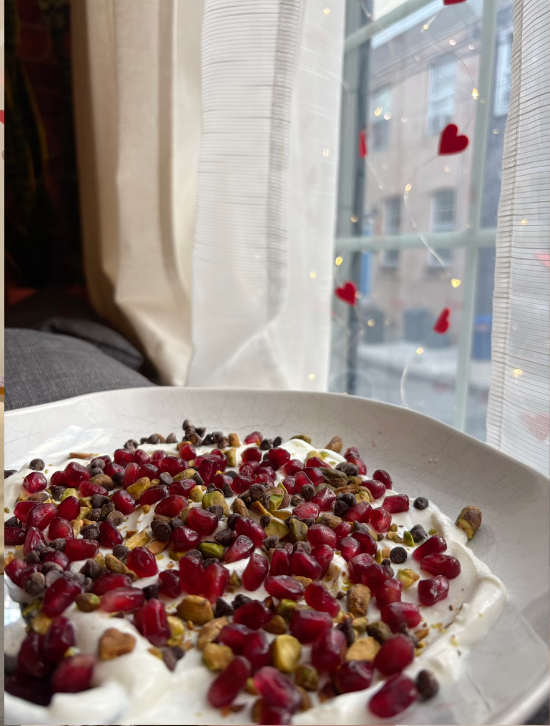
It’s not about extravagance. It’s about romanticizing the mundane - especially during darker months.
3. I Prioritized Movement + Sunlight
I call it my “sunlight stroll.”
Most days, I take it on my lunch break:
Warmer part of the day
Breaks up long hours sitting
Provides light exposure
Bundle up. There’s no bad weather - just bad clothes! Keep your jacket, gloves, ear muffs, and warm slip on warm by the door to reduce any barriers!
4. What I’m Exploring Next
Sunrise alarms
Smart bulbs
Automatic curtain openers
I’ve looked into Hatch but wasn’t thrilled about the paywall... If you have recommendations, I’m all ears! Message me on instagram or email!
Final Thoughts
If you’re in the thick of SAD season or preparing for it, here’s your reminder:
You are not lazy. You are not broken. You are not doomed to be never being "a morning person.”
Rule out the medical. Shift your identity. Build supportive habits.
You don’t need to try harder, you need to think differently and get support. And maybe…You need to save yourself and stop hitting snooze.


Comments