
New Dietary Guidelines, But Make It Make Sense
Ever feel like you know what to eat… but still can’t make it work consistently?
You’re not alone- and the new Dietary Guidelines don’t fully solve that problem either...
In this artical, I break down what changed, what didn’t, why so many people will still feel stuck trying to “eat healthy,” and what to do instead! I give tidbits that I often cover in my sessions for clients who already have a complicated relationship with food, and don't need anymore food noise! Let's dive in:
What changed and why it matters
But first what are the Dietary Guidelines? The Dietary Guidelines for Americans are nutrition recommendations for our nation's health updated every 5 years to reflect the latest nutrition science and they help inform policies and programs. They’re usually based on the report created by a panel of experts, called the Dietary Guideline Advisory Committee, who spend about 2 years reviewing research, holding public meetings, and creating this scientific report in preparation to inform the new guidelines each cycle (1).
The team of experts. Notice how 6 are RD/RDNs 👀🤩

Photo sourced from dietaryguidelines.gov
But this year? This cycle? That report was largely… ignored.
Out of 50+ recommendations: Only 14 were fully implemented. 12 were partially implemented. And 30 were omitted (2).
So the question becomes: If not the science… then what are these guidelines based on?...
And then we get to the new visual...
For over a decade, we had a plate, called MyPlate- Simple, practical, easy to apply:

Now?
We’re back to a pyramid…and its flipped upside down.

Photo from realfood.gov
Which, respectfully - Makes zero sense. Afterall, people eat off of plates, not pyramids. I’ve seen some others in my field call it the keto kone and food tornado, which I feel is more fitting 😅.
However, I fear this new graphic came about out of spite and for some silly joke about how the old 1992-2005 pyramid was "flipped upside down [wrong]" so I find this overhaul of an actual inverted pyramid graphic an odd thing to do for what is outdated information since 2006... 20 years ago…For reference, this is the 1992-2005 “upside down” food pyramid I'm referring to and that Health Secretary, RFK Jr, commonly references as if these were the last guideline in effect before he took his position (3 time stamp 6:42, 4).:

Photo sourced online
But like I said, this pyramind was retired in 2005, replaced by a different pyramid from 2005-2011 called "MyPyramid" with updated information, before being updated again to what was MyPlate from 2011-2025 (5).
Honestly though, I’m surprised grains even made it on the new pyramid visual considering the Health Secretary follows a carnivore diet, but it would seem he realized that he couldn't tell the entire nation to cut out a whole food group- Thank you to whoever helped him see that, if not himself (6, 7).

Photo sourced from X
But here’s the bigger issue: When you remove clarity and ignore evidence, you don’t just confuse professionals… You confuse YOU guys - The general public, the people trying to eat well!
The macro confusion
They’re telling you to eat more protein… but also less saturated fat… but also- Yeah, let’s break this down.
Jumping in, I actually agree with parts of the new guidelines:
More protein? Great. If we're telling people to gain muscle and resistance train, they're gonna need more protein.
More fruits and vegetables? Also great. We still don't eat enough fruits and vegetables (8).
More fiber and gut health focus? Yes, please. Only 5% of Americans meet fiber recommendations… (9)
But here’s where it gets confusing… The visual doesn’t match the recommendations.
For example: Grains are shown as this tiny tip of the pyramid like you should barely be eating them,
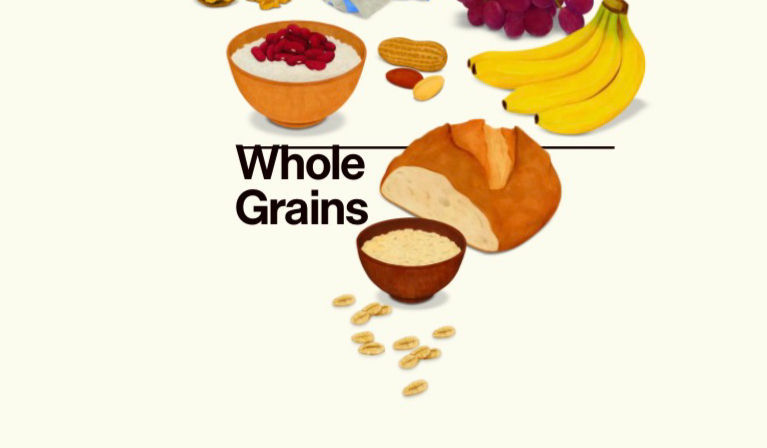

So which is it?
Because most people eat 3 meals a day… and grains could easily fit into each meal- sooo sounds like that still should be a part of the base of what to eat, not the tip?
Same thing with fats.

They’re promoting more whole-fat dairy, animal products, and butter… while still also saying to keep saturated fat under 10% of your daily intake, like they didn’t up the allowance of saturated fat in a day to accommodate the push for more saturated fat food sources…(10, 11)


To put this into perspective, using the general recommendation of a 2000 calorie diet, that would mean ~22 g of saturated fat in a day for a healthy eating pattern (Math: 2000 x .10 then divide by 9 since there are 9 calories/gram of fat)
If for breakfast if you had
🍳 🥛 2 eggs (3 g) cooked in butter (5.5 g/.5 Tbsp) + whole milk latte (5 g/ 8 oz) → ~13.5 g saturated fat
If for lunch if you had
🥩🧈 steak salad (3.5 g/ 3 oz) + buttered roll (5.5 g/.5 Tbsp) → ~13.5 g saturated fat
you could already be maxing out the recommended intake halfway through your day (13.5+13.5= 27 g of saturated fat).

Maybe that's where the Health Secretary got the idea that there was a “war on protein” because plant-based protein sources were getting the limelight helping people hit protein goals while still enjoying saturated fat containing proteins AND not going over the recommended intake? Protein has been king so I really do not know where he got that impression about a war on protein... (11)
And then there’s this line about prioritizing fats with essential fatty acids like olive oil… (10)

“Essential” actually means something in nutrition- It means it must come from the diet and the body cannot make it. There are two essential fats: omega 3 and omega 6. And technically, olive oil, though great for other reasons, isn’t a great source of either essential fats, especially omega-3, Alpha-linolenic acid...
Seed oils, like flaxseed, are and even canola oil are actually better sources for both omega 3 and omega 6... (12)
The irony.
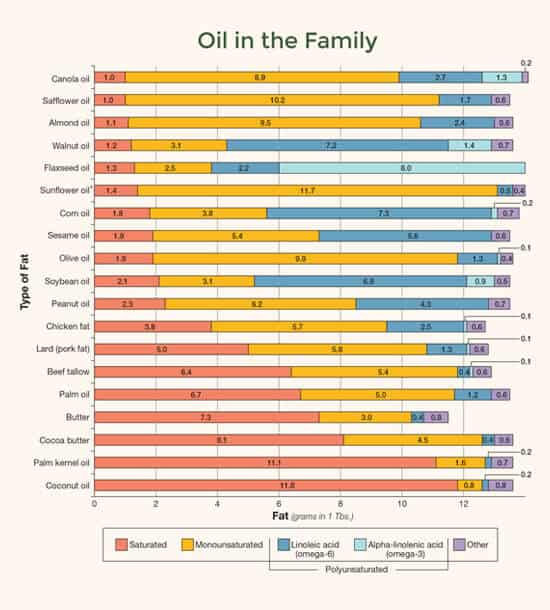
Photo sourced from cspi.org
The bigger issues at hand are:
👉Balancing overall intake of protein sources- From saturated fatty meats to unsaturated fatty fish and nuts to lean options of meats, fish, and beans
👉 fiber intake
👉 and long-term health outcomes concerning heart health
The guidelines aren’t completely off, but the way they’re communicated? Presented? Leaves a lot of room for confusion. And when people are confused…it can feel hopeless feeling confident in making food choices. That's where dietitians can come in to cut through noise like this and can help you actually build meals that make sense, keep you full, and help honor nutrition related health conditions.
Nutrition is nuanced, but this is… a mess.
Listen, I don’t shout out accounts lightly, but I have to shout out Registered Dietitian and Doctor, Jessica Knurick. Who has been spending all of her time explaining these updates to clarify the misconceptions and other public health policy changes. As this is only 1 artical where I barely scratch the surface, I recommend giving her a follow if you want ongoing clarification and updates on this mess: @drjessicaknurick on Instagram.
The alcohol update
We went from clear alcohol guidelines… to "consume less" (11). That’s not helpful.

Previously, there were clear recommendations: Up to 1 drink per day for women, and up to 2 for men (13).
Not saying this is up- to-date recommendations either, but at least it was clear. Now? That’s been removed. And here’s why that matters…
When guidance becomes vague, people are left to define “less” on their own. Less than what? 10? 5? And most people don’t actually know what a standard drink is to begin with:

Photo sourced from ccsa.ca
So if anything… the conversation should be getting more specific, not less.
At the same time, we’re seeing more research linking alcohol to increased cancer risk, even at lower levels of intake. While at the same time, the U.S. Department of Health and Human Services chose not to release its own findings from the new Alcohol Intake and Health Study this past fall 2025 to help inform the new guidelines that were to come out months later… (14) Interesting choice if you ask me. Only time will tell what that's about.
Luckily, other countries are paying attention and are informing their citizens. For example, Canada updated their guidelines in 2023, noting that even 3-6 drinks per week can increase cancer risk for several types of cancer (15):

Photo sourced from ccsa.ca
That’s a meaningful shift from previous recommendations.
So here’s my take as a dietitian:
You don’t need to panic or cut out alcohol completely if you don’t want to. One-two drinks per week is considered lower risk.
But you do deserve clear, honest information so you can make informed choices and “just drink less” doesn’t actually help you do that.
It also skips over something important: A lot of people rely on alcohol for social connection, or should I say social lubrication 😉 (If you dont know what I'm talking about, now you know).
So instead of stopping at “drink less,” we should also be talking about what else can support that same need of social connection. Things like:
coffee shop dates
walks with friends
book club dinners
mocktails
adult sports leagues
game nights or low-key hangouts
restaurants to share a meal instead of dive bar, which tend to only offer drinks
If you know me, you know I say this all the time- Food is more than fuel. It’s connection. It’s enjoyment. It’s part of the human experience.
Ultimately, clarity matters, especially when it comes to your health, and these alcohol recommendations were such a miss for me.
And let me put you on to this awesome book "The Art and Science of Social Connection" to help you shift your focus and understand where your social health stands & what to do about it to wrap up.
What they left out
You can’t build a sustainable diet if you ignore enjoyment, culture, and health equity, but thats exactly what happened.
They completely removed any mention of enjoyment. And that matters more than people think because food isn’t just fuel. It’s culture, connection, tradition, the most consistent sources of joy in our day! Previous guidelines actually referenced enjoyment multiple times - Twenty-two times, to be exact per keyboard shortcut command F lol (13).
Now? Nothing. Zero (10)
And here’s the problem with that… When enjoyment isn’t part of the conversation, people start building meals around what they feel like they should eat. They prep the “healthy” option… but when it’s actually time to eat? It doesn’t sound good. They’re not in the mood for it. It’s not satisfying. So what happens? It sits in the fridge… and they end up ordering something that does sound good instead. And now we’re stuck in this cycle of:
👉 wasted food
👉 frustration and guilt
👉 never actually feeling satisfied
👉 and feeling like we’re “failing” at eating healthy
When really… enjoyment was never part of the plan to begin with. There’s actually a concept of intuitive eating called the satisfaction factor, and it plays a huge role in feeling done eating (16). It includes:
✨ what you’re craving
✨ how the food tastes
✨ the environment you’re eating in
✨ and the overall experience
When that’s missing? You keep searching. You keep snacking. You feel out of control, not because you lack discipline, but because your need for satisfaction wasn’t met.

And honestly? No matter how much the Health Secretary wants to blame previous guidelines for the state of our nation’s health… most people weren’t reading or following them to begin with or even knew they existed. Hard to blame something that no one was following in the first place. At the same time, it's also not new information that we need to eat fruit and vegetables, ya know? There is simply a gap between knowing and doing.
Plus, the recommendations for this cycle compared to last, mainly regarding macronutrient/food group recommendations (because that's really all they kept this cycle), are very similar besides the bump up in protein. Of note, both the current and previous guidelines were recommending whole foods, protein, unsaturated fats, whole grains, produce, etc. If he was concerned about how legnthly the last guidelines were (164 pages) as a barrier for knowing, all he had to do was create an additional, shorter, consumer facing pamphlet, not dismantle the entire guide that helps professionals like myself...and leaving us with a 10 page mess (13, 10)
And it’s not just enjoyment that was removed. Healthy equity and cultural relevance were also left out as well (13, 10).
The Health Secretary led a report titled “The Scientific Foundation for the Dietary Guidelines for Americans,” which explains why his team wanted to “overhaul” the 2020–2025 guidelines, and why they chose not to adopt 30+ recommendations from the Dietary Guidelines Advisory Committee (DGAC) report. One of core the reasonings? That the DGAC evaluated nutrition science through a health equity lens- Considering factors like culture, access, and socioeconomic status, and that this approach may have influenced how the evidence was interpreted. Their stance is that science should first reflect the best available evidence, independent of those considerations…and that equity should be addressed later, during implementation (1 ,2).
So their idea is to simplify the message: Focus on the science, make it clearer. On the surface- I see their point. But here’s the disconnect: If we separate nutrition guidance from real-life factors like access and culture, we risk ending up with recommendations that are easy to understand…and still hard to follow. (And remember, many Americans haven't been following any recommendations to begin with...lol)
The report even states:
"We recognize and share concerns regarding the affordability and accessibility of healthy food, particularly for disadvantaged populations. However, these challenges are best addressed by first establishing clear, unbiased scientific guidance on the optimal diet for Americans. That science can then serve as the foundation for effective downstream policy solutions (2)."
And this is where things start to feel even more misaligned for me because at the same time this report says that^, this same admistrative team just proposed to cut programs like Special Supplemental Nutrition Program for Women, Infants, and Children (WIC), targeting reductions to fruit and vegetable benefits. If brought to fruition, then monthly produce assistance drops from $52.00 to $13.00 per month for breastfeeding mothers and from $26.00 to $10.00 per month for young children (17).
So then my question is: If access is acknowledged as a barrier…but the systems that support access are being reduced… How does that actually help people follow the guidance and "make America healthy again"??
Nutrition doesn’t exist in a vacuum: You can tell someone to eat more fruits and vegetables all day long, but if they can’t afford them or don’t have access, that recommendation doesn’t translate into real life. That gap between knowing and doing matters. Instead of overhauling this cycles guidelines, I personally think expanding access to dietitians who are training to help patients bridge the gap between knowing and doing would have been more meaningful to "make America healthy again."
As for culture, we live in a country with so many different food traditions, cuisines, and preferences, and when people don’t see themselves reflected in the guidance, it becomes a lot harder to connect with it… or apply it to their real life.
When you remove enjoyment, cultural relevance, and real-life context, it doesn’t make people healthier. It just makes the guidance harder to connect with… and harder to follow. That’s exactly why I approach nutrition differently with my clients. I help them bridge the gap between knowing and doing- Making sure what they know is, first, accurate and then, second, helping it make sense in their own life.
People also don’t want to eat like robots, constantly calculating every bite either like what Diet Culture tells them to do. They want something that feels doable, satisfying, and sustainable. Yes - That includes finding balance… without overthinking every meal. More on this next!
How I teach nutrition as an intutive eating dietitian
If the guidelines feel confusing… this is how I explain it with my clients. I don’t use just one food visual model - I use three.
Because eating in real life isn’t one-dimensional: There are macronutrients (which are protein, fat, carbs, and fiber) that make up foods, and then there is how the food presents in real life as food groups. For example, a food like oil is mainly fat, but a food like nuts are fat, fiber, and protein. Being able to know which foods contain which macronutrients is what makes applying nutrition easy. Lets break this down:
First: The macro plate
I’m looking for: ✔️ protein ✔️ carbs ✔️ fat ✔️ fiber

We know we need these 4 macros for optimal nourishment so rather this model also helps answer one simple question: “Will this meal actually keep me full?” because each macro nutrient plays a role in satiety:
Carbohydrates: There are simple and complex carbs. Complex carbs take longer to digest than simple carbs to help keep you fuller for longer; However, both will need to be paired with the other macronturients to have better staying power. Additioanlly, there is a reason you feel headaches, lack energy, and have poor concentration when underfed- The brain has the highest demand for glucose (carb) to function! Carbs also support your muscle maintaince so include carbs! 🥨🍎🥛🫘🥔🍯
Fiber: Fiber is a type of complex carb, but its not digestaibl so instead of providing energy like the carbs above, it does other roles like protects your intestinal tract by adding bulk & drawing water to form healthy stools, speed up elimination, and feed your gut bacteria. Fiber also adds bulk & viscosity to meals and slows digestion to keep you fuller for longer. 🍓🥦🥔🍞🫘🥜
Protein: Needed to make things from your hair, muscle, organs, and hormones- Its a main building block for our body! Plus protein gives a satiety factor at meals as it takes time to digest and triggers messages to the brain to keep you feeling full. 🍗🥩🍳🐟🍤🧀🫘🥜🍞
Fat: Needed at meals to enhance the absorption of other nutrients and make food taste good! Fat tissue is needed for our nervous system, to cushion bones, and to keep us warm. Fat at a meal delays the stomach from empyting to keep you fuller for longer! 🍗🥩🍳🍣🦀🧀🥜
And if the meal doesn’t keep you full… you’re going to keep thinking about food all day.
Second: The food group plate (similar to MyPlate)

Half the plate: fruits and veggies
A quarter: protein
A quarter: grains
And some fat
This helps with balance and variety, and gives a rough idea of how much to serve yourself of the food groups- You'll still have to "goldilocks" your portion size to reflect your lifestyle and appetite best, though. However, this model is harder to apply especially with mixed dishes like soups, sandwiches, casseroles, which is why I instead pull these two plates together as an easy check list to run through when planning meals each week:
✔️ protein
✔️ carbs
✔️ fat
✔️ fiber
✔️ produce
✔️ with a final check for anything else to crush hunger, nourish optimally, or satisfy with?
Most people don’t need more nutrition information - They need a way to apply it like this!
And third: The REAL food pyramid (18)
Yes, a pyramid but trust, this one hits different, and I do have these 2 plate models to help it land.. No food tornado here okay?
This model is how I zoom out and describe a healthy eating pattern over time, especially for those repairing or protecting their relationship with food, which is my niche practice.

At the base we have the 5 major food groups: Protein- animal and plant based, grains, fruits & vegetables (a larger component of the base reflecting half the plate recommendations), dairy, and liquids. Then daily fats like oils and nuts. Then fun and social foods are INCLUDED daily as well - not avoided. And at the top? Are things like diet foods.
Not because they’re “bad,” but because they can displace nutritious foods from your diet. For example, you can like diet coke and not be on a diet, but we're no longer trying to win out hunger by stretching the stomach with zero calorie fluids as Diet Culture taught, when hunger is the body asking for calories, for energy.
Per the new dietary guidelines, many fun foods are to be avoided, but in practice, that's just not realistic (10). Instead, I like to guide clients on how to navigate their food environment and their fav fun foods within it in a helpful manor- No longer binge/restricting and heading towards moderation.
The big key difference with my approach is I’m not just teaching you what to eat. I’m teaching you how to:
✔️ build meals that actually satisfy you
✔️ stop overthinking food to help quiet food noise
✔️ and trust your hunger for an internal guide for eating
Nutrition shouldn’t feel like a set of rules you’re constantly trying to follow…and that blows up in your face when life throws you a curve ball. It should feel like something you understand, some sort of structure to get inspired with, and maintain flexibility with choices and circumstances.
And this is exactly what we work on together in sessions on so you can finally feel confident in how you are eating and your food choices. If you want support with that, you know I’d love to work with you. Book a session today- Insurance is typically accepted! Hope to see you soon 😊


Comments